
System Solution Ess :100kwh Lithium Ion Battery For Solar Storage system
A wide array of storage technologies have been developed so that the grid can meet everyday energy needs. Since the discovery of electricity, we have sought effective methods to store that energy for use on demand. Over the last century, the energy storage industry has continued to evolve, adapt, and innovate in response to changing energy requirements and advances in technology.
OSM INEW-Y100 energy storage system (ESS)is a Lithium battery storage system. It is Widely used in commercial buildings, industrial fields and power grid side, for enterprises to efficiently save the cost of power operation and maintenance. 3 to 5 years of energy saving and recycling can cover the cost of the product. Inside is a Energy storage designed BMS. This is already proved to compatible with different brand inverters no matter on grid or off grid one. Like Grawatt, Deye,BYD,Huawei.. please contact us for more brand support.
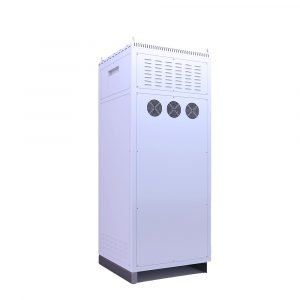
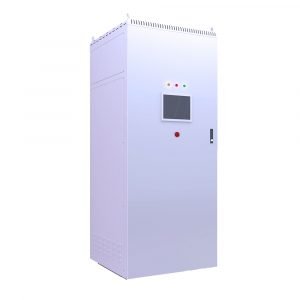

INEW-Y100 energy storage system(ESS)
| Product Parameter | |||
|---|---|---|---|
| Model | INEW-Y100 | ||
| Installation Mode | console mode | Rated grid voltage | 380V |
| System weight | 890KG | Rated current | 46A |
| System capacity | 100KWh | Rated grid frequency | 50Hz/60Hz |
| Sustained power | 30KW | Cooling mode | forced cooling |
| Working temperature | —20~50℃ | Human-computer interaction | Linux system |
| Power factor | 0.99(Lead)—0.99(lag) | ||
| Overload capacity | 1.1 times(long-term)1.2 times(> 1 min) | ||
| Communication interface | RS485、RS232、CAN、Ethernet | ||

For commercial buildings such as schools, factories and petrol stations that require higher energy demand, solar PV system with battery storage can enable business to maximise their energy independence and reduce peak power demand; For business without solar PV system, battery storage can enable business to store energy from the grid at off peak price and use at peak time.

100KWH energy storage system ESS

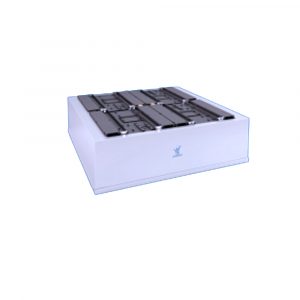
Energy storage systems provide a wide array of technological approaches to managing our power supply in order to create a more resilient energy infrastructure and bring cost savings to utilities and consumers.
- Smart on/off grid functions
- 10 year warranty
- Long cycle Lithium Ion battery
- Intergratable with wind and solar renewable energy generation
- UPS functions

OSM’s ESS 100kwh provides one-stop solutions for commercial and industrial facilities to reduce your electricity bill, protect your business from rising energy expenses; generate stable revenue from renewable energy production and subsidies; and ultimately reduce carbon footprint.
OSM ENERGY
AS the powerwall wholesale, OSM ENERGY Focusing on the R&D, Manufacturing and pack production of the world most leading lithium motive batteries. Providing customers turnkey solutions and stable product service during its whole cycle. For more information please contact us:

TEL:+86-0755-2100 2559
What an ESS consists of
An energy storage system is more than a battery. Four subsystems work together, and a weak link in any of them limits the whole installation:
| Subsystem | Function |
|---|---|
| Battery bank | Stores energy; sets the capacity in kWh |
| PCS / inverter | Converts DC to AC and back, sets the power in kW |
| EMS | Decides when to charge, discharge or hold, based on tariffs and load |
| BMS and protection | Cell-level supervision, contactors, insulation monitoring |
The battery voltage class ties these together: a 100 kWh commercial system is normally high voltage, and the architecture that supports it is described in how high voltage battery systems work.
100 kWh commercial ESS: configuration
A 100 kWh class system is usually built from high voltage racks in parallel. At 512 V a 100 Ah rack stores about 51 kWh, so two racks reach the target; at 768 V fewer parallel strings are needed. The physical footprint depends on the cell format and the enclosure — rack cabinets suit a plant room, containerised units suit an outdoor site. A ready example of the custom build route is our 50 kWh 512 V ESS battery, scaled up to the required energy.
Peak shaving and demand-charge management
Most commercial ESS value comes from the load profile rather than from storing solar. Two mechanisms dominate:
- Peak shaving — the battery discharges during the short daily peaks that set the maximum demand, so the site’s import never reaches the level that triggers the highest tariff.
- Load shifting — the battery charges in low-tariff hours and discharges in high-tariff hours, buying cheap and using expensive.
Both are driven by the EMS, which is why the communication between BMS and EMS has to be solid; the interface is the same one described for high voltage BMS architecture.
Estimating the payback
A first-order payback compares the annual saving with the installed cost. The annual saving is the demand-charge reduction plus the tariff arbitrage plus any solar self-consumption gain. Because a LiFePO4 bank cycles thousands of times at 80 % DoD, the cost per delivered kWh is low enough that industrial systems commonly pay back within five to seven years where the demand tariff is high. The decisive input is the site’s load profile — ask for a measured 15-minute interval dataset before sizing.
ESS FAQs
What does ESS stand for in batteries?
Energy Storage System — a complete installation that stores electrical energy and releases it on demand, made up of the battery, the PCS, the EMS and the protection system.
What is the difference between a battery and an ESS?
The battery is the storage element; the ESS is the whole system, including the power conversion, the control logic and the safety hardware.
How is a commercial ESS sized?
By the load profile: the peak determines the power rating (kW) and the energy needed between charge and discharge determines the capacity (kWh). Both come from interval meter data.
Need a quote? Send us your load profile and tariff structure and we will size a C&I energy storage system — factory-direct, no obligation.

Leave A Comment