

LFP 5,000-cycle, 5 kWh lithium-iron phosphate battery Unveiling
OSM Technology debuted a new 5-kWh Lithium Iron Phosphate 5,000-cycle battery in its line of energy storage solutions for home and commercial use. The OSM 5 kWh, based on Lithium Iron Phosphate LFP technology, offers the longest life and minimum power loss of any similar Lithium battery on the market today. The 5 kWh is set for unveiling on Nov. 2020. Based design based on the Solar, Storage, and Smart Energy.
“We did worked hard to perfect this energy storage product,” states Alber, CEO for OSM energy. “Our product testing has been rigorous to assure that we provide the longest life, safest, and most reliable energy for residential, emergency, or commercial use. We have minimized battery cycling and operating temperatures, while maximizing depth of discharge (DoD) and the greatest universal compatibility.”
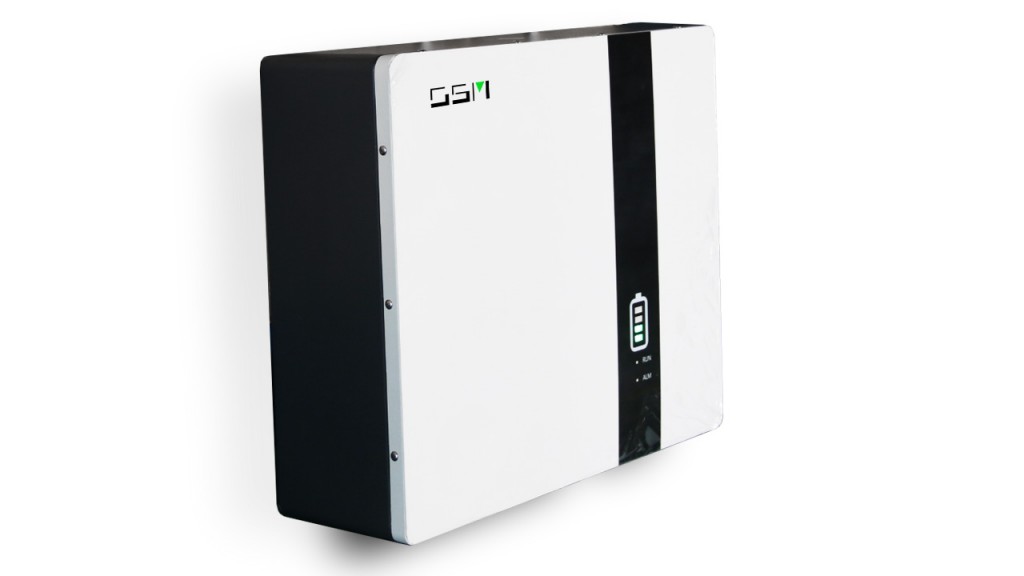
Details of 5Kwh Battery Bank
Why LiFePO4 batteries?
Traditional lead-acid chemistries suffer from “memory” issues which degrade charge capacity over time. If not recharged, they may lose significant charge without even being used. Lithium Iron Phosphate has far less memory issues and holds a charge better over time. The OSM 5 kWh features advanced protection from over-discharge, over-current, short circuit, and temperature variations. These 5 kWh batteries are stackable up to 20 units (100 kWh).
Lithium iron phosphate (LiFePO4) batteries have a fast recharge rate and can withstand cold, heat, collision, and mishandling during charging and discharging without risk of combustion.
5000 wh battery bank with BMS
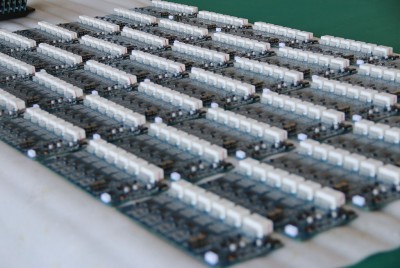
OSM Technology is fueling the evolution of home and commercial power management, and the way contractors offer it. With OSM Battery management system (BMS ). OSM BMS is design by industry standard, use the most advanced Hardware logic to make sure the stable and long cycle life of the power bank. It is rated 8 years for daily use. and OSM based on real test for more then 15 years life. OSM BMS is the power industry’s first all-in-one Electrical Storage System (ESS) that intelligently manages the flow of electricity from any source for any use. We apply commercial micro-grid thinking for the residential market, as well as for commercial customers seeking systems for securing the most cost-effective flow of electricity – on or off-grid.
Specification Datasheet
| Model | Wall Mounted 5.2kWh LiFePO4 Battery Pack | ||
|---|---|---|---|
| Capacity Energy | 5.2kWh | ||
| Capacity Ah | 100Ah | ||
| Suggested SOC | 5%~100% | ||
| Usable Capacity | 4.8kWh | ||
| Nominal Voltage | 51.2V | ||
| Operation Voltage | 46.4V – 57.6V | ||
| Maximum Charging/Discharging Current | 100A/100A | ||
| BMS | Robust Multi point monitoring BMS pre installed | ||
| Life Cycling (0.5C 25℃) | 5000 cycles | ||
| Warranty BTT | 10MWh per kWh | ||
| 5 years, whichever comes sooner | |||
| Operation Temperature | 0℃ ~ 45℃ | ||
| Storage Temperature | -20℃ ~ 35℃ | ||
| Weight | 50kG each pack | ||
| Dimensions | 537x450x 165 mm | ||
| Scalable | yes | ||
| Certifications | MSDS, UN38.3, RoHS, IEC62619, UL | ||
| Communication | RS485, CAN or RS232 for hybrid inverters | ||
Backside Design for wall Mount

What 5,000 cycles means in years
Cycle life is only meaningful once it is converted into time. At one full cycle a day, a 5,000-cycle battery lasts about 13.7 years before its capacity falls to 80 % of the original figure. At half that duty — the pattern of a home that discharges only in the evening — the same rating stretches past 20 years. Because the chemistry also ages on a calendar clock, the realistic service life of a LiFePO4 home battery quoted at 5,000–6,000 cycles is 10–15 years, as explained in calendar life versus cycle life.
What 5.2 kWh can power
At 51.2 V nominal and 100 Ah, the battery stores 5.12 kWh, of which about 4.8 kWh is usable at the recommended state-of-charge window. That is enough for:
| Load | Typical draw | Run time on 4.8 kWh usable |
|---|---|---|
| Lighting and electronics | 0.3 kW | About 16 hours |
| Refrigerator | 0.15 kW | About 32 hours |
| Wi-Fi, TV and laptops | 0.25 kW | About 19 hours |
| Microwave | 1.0 kW | About 4.8 hours |
5 kWh vs 10 kWh: which size?
Two 5 kWh units in parallel give 10 kWh, so the decision can be deferred. Start with a single 5 kWh battery when the nightly load is under about 5 kWh and outages are short, and add a second module when either the consumption grows or you want a full day of backup. A 10 kWh LiFePO4 home battery is simply two of these modules working together, which is why the modular route is the safer first purchase.
Specifications explained
- 51.2 V nominal — 16 LiFePO4 cells in series, the standard “48 V class” bus for inverters.
- 100 Ah — the capacity; multiplied by voltage it gives the 5.12 kWh energy rating.
- 5,000 cycles at 0.5C, 25 °C — the test condition behind the cycle-life claim.
- Multi-point BMS — cell-level voltage, current and temperature supervision built in.
- RS485 / CAN — closed-loop communication with hybrid inverters.
Where this battery fits
- Home solar self-consumption and evening backup
- Small commercial and shop backup
- Off-grid cabins with modest loads
- Expansion module for an existing 48 V bank
For the wall-mount alternative in the same capacity class see the 48 V 100 Ah / 200 Ah powerwall.
5 kWh battery FAQs
How long does a 5 kWh battery last?
Its cycle rating of 5,000 corresponds to about 13.7 years at one cycle a day, and its calendar life is 10–15 years. Whichever limit is reached first ends the useful life.
Can a 5 kWh battery run a house?
It can carry essential circuits for a day and cover the evening peak for a small home. Whole-home backup with heavy loads needs 10 kWh or more.
Is 5 kWh enough for solar self-consumption?
For a home that imports under 5 kWh after sunset, yes. Larger evening loads justify a second module.
Need a quote? Tell us your nightly consumption and inverter model and we will confirm whether one 5 kWh module is enough — factory-direct, no obligation.

Leave A Comment