

Does The Lithium-Ion Battery Depend On The Calendar Life Or The Cycle Life?
For how long a battery can be used is related to the cycle life and the calendar life of the battery.The cycle life is the number of times the lithium-ion battery can be charged and discharged. The calendar life is the battery to reach the end of life condition (capacity decays to 80%)under specific operating conditions and the environmental conditions.
Factors for affecting cycle life
 Partial discharge:Using only 20 or 30 percent of the battery capacity before charging will greatly extend the cycle life.Generally speaking, one full discharge cycle is equal to 5 to 10 shallow discharge cycles. Although thousands of times partial discharge cycles can be occurred , keeping the battery fully charged also shortens its life. If possible full discharge cycles should avoid as much as possible (down to 2.5 or 3 volts, depending on the chemical composition).
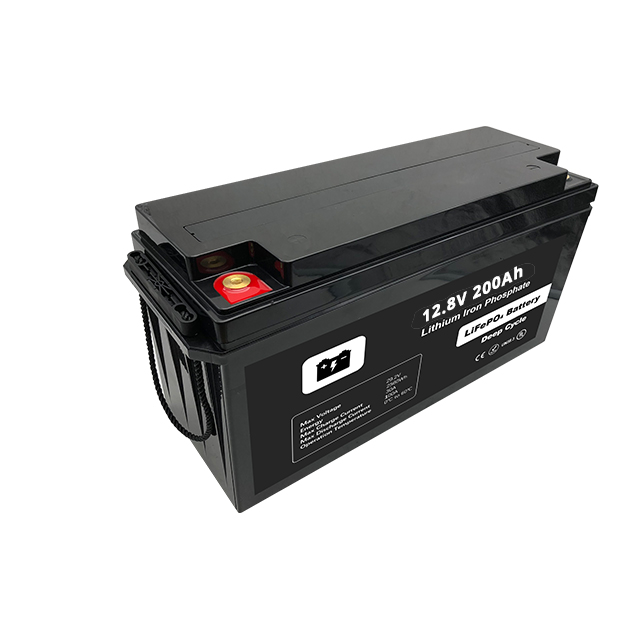
- Avoiding charging to 100% capacity:For this,you can choose a lower floating voltage.Lowering float voltage increases cycle life, but at the expense of reducing battery capacity.Reducing the float voltage from 100-mV to 300-mV can extend the cycle life by 2-5 times or more.Compared with other chemical reagents, lithium ion cobalt reagents are more sensitive to higher floating pressure.Lithium-ion phosphate batteries usually have a lower float voltage than conventional lithium-ion batteries.
- Selecting the correct charge termination method: Choosing a minimum charging current terminal charger (C/10 or C/x) can also extend battery life by not charging to 100% capacity.For example, when the current drops to C/5, ending a charging cycle, this is similar to reducing the float voltage to 4.1V. In both cases, the battery is only charged at about 85 percent of capacity, which is an important factor in battery life.
- Limiting battery temperature: Limiting the temperature of lithium-ion batteries can extend their service life, especially at temperatures below 0℃.When charging below 0℃, it will promote the metal coating of battery anode, form internal short circuit and generate heat, making the battery unstable and unsafe.Some battery chargers measure battery temperatures to ensure that charging does not occur at extreme temperatures.
- Avoiding high charge and discharge currents: The cycle life will reduced when charge or discharge currents are too high . Some chemistries like Li-ion manganese and Li-ion phosphate are more suited for higher currents. High currents will put excessive pressure on the battery.
- Avoiding extremely deep discharges (below 2 V or 2.5 V): Extremely deep discharges will damage a lithium-ion battery quickly and permanently. This will cause a short circuit of internal metal plating,and will make the battery unusable and unsafe. Most lithium-ion batteries have protection circuitry within their battery packs,which open the battery connection if the battery voltage is less than 2.5 V or exceeds 4.3 V, or if the battery current exceeds a predefined threshold level when charging or discharging.
Factors for affecting the calendar life
- Aging of battery: The calendar aging of the battery is mainly due to the formation of a passivation layer on the negative electrode. The formation of films on positive and negative electrodes is mainly a process of aging. The calendar life of a battery is affected by the charged state (SOC) it stores. The effect of SOC on calendar life will depend on battery chemistry. Lead-acid batteries need to be stored at full charge for maximum life, while lithium-ion and AGM deep-cycle batteries need to be stored at 40 per cent full charge.
- Storage temperature:The temperature at which the battery is stored also affects the calendar life. As the temperature rises, the rate of reaction speeds up.This increases the rate of unnecessary chemical reactions and also increases battery degradation.High temperatures are detrimental to the battery’s calendar life.

OSM ENERGY
OSM ENERGY Focusing on the R&D, Manufacturing and pack production of the world most leading lithium motive batteries. Establishing a full industry chin in vehicle and energy storage batteries field to achieve a perfect combination of new energy power generation, storage and consumption under the smart internet managment. providing customers turnkey solutions and stable product service during its whole cycle. For more information please contact us:

TEL:+86-0755-2100 2559
Cycle life of a lithium-ion battery: typical numbers by chemistry
Cycle life is quoted as the number of full charge–discharge cycles a cell completes before its capacity falls to a defined end-of-life point, conventionally 80 % of the original capacity. The figure depends heavily on the chemistry and on how deeply each cycle is run:
| Chemistry | Typical cycle life | End-of-life definition |
|---|---|---|
| LiFePO4 (LFP) | 3,000–6,000+ | 80 % capacity at 0.5C, 25 °C |
| NMC | 1,000–2,000 | 80 % capacity at 1C, 25 °C |
| LCO (consumer cells) | 500–1,000 | 80 % capacity, shallow depth |
| LTO | 10,000–20,000 | 80 % capacity, high-rate use |
Calendar life: why a battery ages even when it is not used
Calendar life is the degradation a cell suffers simply from existing — time spent at a given state of charge and temperature. The two mechanisms run in parallel, not in sequence:
- Time — the solid-electrolyte layer on the anode keeps growing slowly, consuming lithium and raising internal resistance.
- State of charge — a cell held at 100 % SoC ages noticeably faster than one stored near 50 %.
- Temperature — reaction rates roughly double for every 10 °C, so a battery stored hot can lose its calendar life years ahead of schedule.
This is why a battery that is rarely cycled still has to be replaced eventually: the calendar clock runs whether or not the cycle counter does.
Which limit comes first?
The practical answer is a comparison, not a rule. Convert the cycle rating into years:
Years ≈ cycle life ÷ cycles per year
- A LiFePO4 cell rated 6,000 cycles cycled once a day reaches the limit in about 16 years — so the cycle life dominates.
- The same cell cycled once a week reaches the cycle limit in over a century, so the calendar life (commonly 10–15 years) dominates instead.
- A lightly used battery kept at 100 % SoC in a hot room can degrade on the calendar clock in as little as 5–8 years.
Daily-cycling applications such as solar storage are therefore usually cycle-limited, while standby backup is calendar-limited. Our guide to calendar life versus cycle life follows the same reasoning from the application side.
How depth of discharge and temperature change cycle life
| Operating condition | Effect on life |
|---|---|
| 100 % DoD every cycle | Baseline cycle life |
| 80 % DoD | Noticeably longer, the usual design point |
| 50 % DoD | Roughly two to three times the cycle count |
| 25 °C constant | Reference temperature |
| 35 °C constant | Life reduced by roughly a third |
| 45 °C constant | Life roughly halved |
The protected window inside the BMS exists precisely to keep the pack away from the extremes of this table, which is why the BMS specification matters as much as the cell specification — see BMS for lithium battery packs.
How to extend lithium battery life
- Keep the average state of charge in the middle for storage; do not leave a pack at 100 % for months.
- Avoid sustained temperatures above 35 °C, and never charge below 0 °C.
- Design for 80 % DoD rather than 100 % to trade a little capacity for a much longer life.
- Do not leave a depleted pack discharged — recharge it to about 50 % before storage.
- Rely on a cell-level BMS for balancing; unbalanced strings fail early.
Battery life FAQs
What is the difference between cycle life and calendar life?
Cycle life counts how many charge–discharge cycles a battery survives; calendar life measures how long it survives in time regardless of use. Whichever limit is reached first ends the battery’s useful life.
How many years does a lithium-ion battery last?
Consumer cells commonly last 2–4 years, EV packs 8–15 years and LiFePO4 storage 10–15 years. Daily-cycled LFP often outlives the equipment it powers.
Does a battery age if I never use it?
Yes. Calendar ageing continues through time, state of charge and temperature, so an unused battery stored at high charge in a warm place can still lose capacity.
Need a quote? Tell us your daily cycles and expected service life and we will recommend a LiFePO4 pack that meets it — factory-direct, no obligation.

Leave A Comment