
Battery Management System (BMS) For Lithium Battery Pack
It is well known that BMS(battery management system) is essential in lithium-ion battery systems.It manages real-time control of each battery, communicates with external devices, manages SOC calculations, measures temperature and voltage, and so on.The selection of BMS determines the quality and life of the final battery pack.A battery management system (BMS) usually includes:
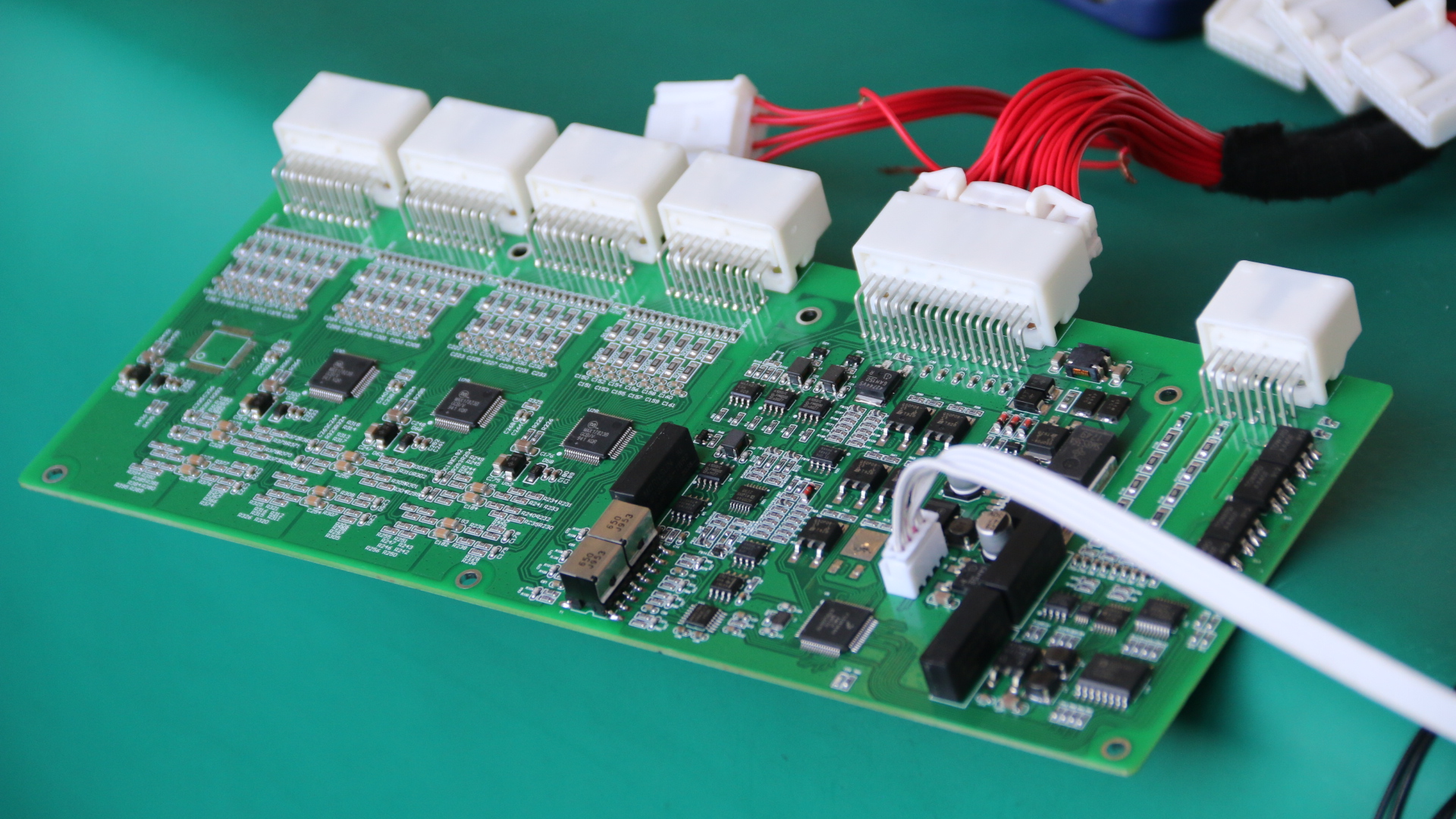
Main protection circuit
- Key features of BMS
- Prevent over current, over/under voltage, over/under temperature and other unsafe conditions
- By analog monitoring IC execution, the IC can monitor the temperature, current and voltage levels of the cell/cell stack
Battery balance
- Battery imbalance can shorten battery life
- The current absorption is not uniform, the heat load is not uniform and the battery is not well matched
- The battery balance circuit tries to balance the battery charge to keep all the batteries in series at the same level
Secondary protection circuit
- Redundancy protection mainly prevents overvoltage and can increase overcurrent and overtemperature protection
- Usually through a chemical fuse;It will permanently shut down the battery pack
Measurement of fuel
- Digital monitoring integrated circuit can feedback the battery capacity
- Three commonly techniques used for determining residual capacity battery include:
- 1.Voltage induction – Most primitive
- 2.Column counting – Measures the capacity used and subtracts from the total capacity known
- 3.Impedance tracking – The ability to calculate impedance based on the battery

BMS can protect a battery packs or host device from various events, depending on what hardware is selected or required for a particular application.For example, it can protect against undesirable current (A), voltage (V), and temperature (C) events.The BMS tracks any abnormalities in the battery, such as what protection has been activated and how much power/capacity is left when the battery is charged and discharged.They can also help achieve cell balance and other cell maintenance and optimization functions.
It should be noted that when a BMS sends a request, it needs to allow sufficient response time for subsequent processing intelligence.More importantly, the CURRENT overcurrent protection strategy for the BMS must be coordinated with the vehicle controller and the load intelligent controller.Discordant strategies produce the unpleasant phenomenon in which strategies work well but often fail.
OSM ENERGY
OSM ENERGY Focusing on the R&D, Manufacturing and pack production of the world most leading lithium motive batteries. Establishing a full industry chin in vehicle and energy storage batteries field to achieve a perfect combination of new energy power generation, storage and consumption under the smart internet managment. providing customers turnkey solutions and stable product service during its whole cycle. For more information please contact us:

TEL:+86-0755-2100 2559
What a BMS protects against: LiFePO4 thresholds
The protection circuit is the part of the BMS that stops a fault before it becomes permanent damage. Typical LiFePO4 thresholds are shown below; the exact numbers are set in firmware and vary by supplier.
| Parameter | Typical LiFePO4 threshold | What happens |
|---|---|---|
| Cell over-voltage | 3.65 V per cell | Charge FET opens / charging stops |
| Cell under-voltage | 2.50 V per cell | Discharge FET opens / load disconnected |
| Pack over-current | 1.5–2× rated continuous | Current limit, then cutoff |
| Charge temperature | 0 °C to 45 °C | Charging inhibited outside the window |
| Discharge temperature | −20 °C to 55 °C | Discharge inhibited outside the window |
| Short circuit | Milliseconds | Immediate hardware cutoff |
Smart BMS vs protection-only BMS
A protection-only BMS is a safety device: it watches the cells and disconnects when something goes out of range. A smart BMS adds communication and state estimation — state of charge, state of health, cell voltages, temperature and fault codes reported over CAN, RS485 or Bluetooth. The practical difference shows up in closed-loop operation: when the inverter receives live limits from the BMS, it can charge at the maximum safe rate instead of falling back to conservative voltage-only control.
How the BMS talks to the inverter: CAN and RS485
- CAN bus — the industry standard for inverters, vehicles and industrial ESS. Carries real-time voltage, current, SoC and alarm codes, and is the interface most hybrid inverters expect for closed-loop lithium communication.
- RS485 / Modbus — used by EMS and monitoring platforms that poll many packs from a single controller.
- Bluetooth / UART — for app-based configuration and field diagnostics.
For a definition of the controller that sits at the top of this architecture, see what a BMS and a BMU are, and for large packs see BMS architecture for high voltage batteries.
Active vs passive cell balancing
Cells age at slightly different rates, so without balancing the weakest cell hits its limit first and the whole string stops early. Passive balancing bleeds energy from the highest cells through resistors — simple and cheap, but it wastes the excess as heat. Active balancing moves charge from higher cells to lower ones, so almost no energy is lost and balancing is faster, at higher cost. Which is worth it depends on pack size and duty cycle; our explainer on BMS balance technology covers the trade-off.
How to choose a BMS for a lithium battery pack
- Chemistry and string length — the BMS must match the cell count and the per-cell voltage windows.
- Continuous and peak current — size for the peak the load actually draws, with headroom for inrush.
- Communication — CAN if the inverter supports closed loop, RS485 for monitoring platforms, Bluetooth for service access.
- Balancing current — higher balancing current recovers mismatched capacity faster in large packs.
- Temperature sensing — at least one sensor per module, not one per pack.
- Certification and support — for export markets the BMS should carry the relevant safety marks and be serviceable in the field.
BMS FAQs
What happens if a lithium battery has no BMS?
Without cell-level supervision there is no over-charge or over-discharge cutoff, no balancing and no temperature protection. A single weak cell can be driven into permanent damage, and an over-charge fault becomes a fire risk. For stationary storage the BMS is not optional.
Can a BMS be replaced or upgraded?
Yes, if the replacement matches the string length, chemistry and current rating, and if the pack can be opened safely. On our packs the BMS is a serviceable module rather than a potted assembly.
Does a BMS reduce usable capacity?
It reserves a small margin at the top and bottom of the voltage window to protect the cells, so usable energy is slightly below the nameplate figure. That reserve is what makes the cycle-life claim achievable.
Need a quote? Tell us your voltage, capacity and communication requirements and we will match a BMS-equipped LiFePO4 pack — factory-direct, no obligation.

HI,
We are looking for a BMS circuit for our device with charger and fuel gauge and protection Controls.
Please suggest the suitable circuit with pack for our requirements,
Find below details for Specifications,
Nominal voltage 12.6V
Capacity : 2600mAH
charging : 0.5C
please suggest suitable pack and circuit
Thank you
HI,
We are looking for a BMS circuit for our device with charger and fuel gauge and protection Controls.
Please suggest the suitable circuit with pack for our requirements,
Find below details for Specifications,
Nominal voltage 12.6V
Capacity : 2600mAH
charging : 0.5C
please suggest suitable pack and circuit
Thank you