
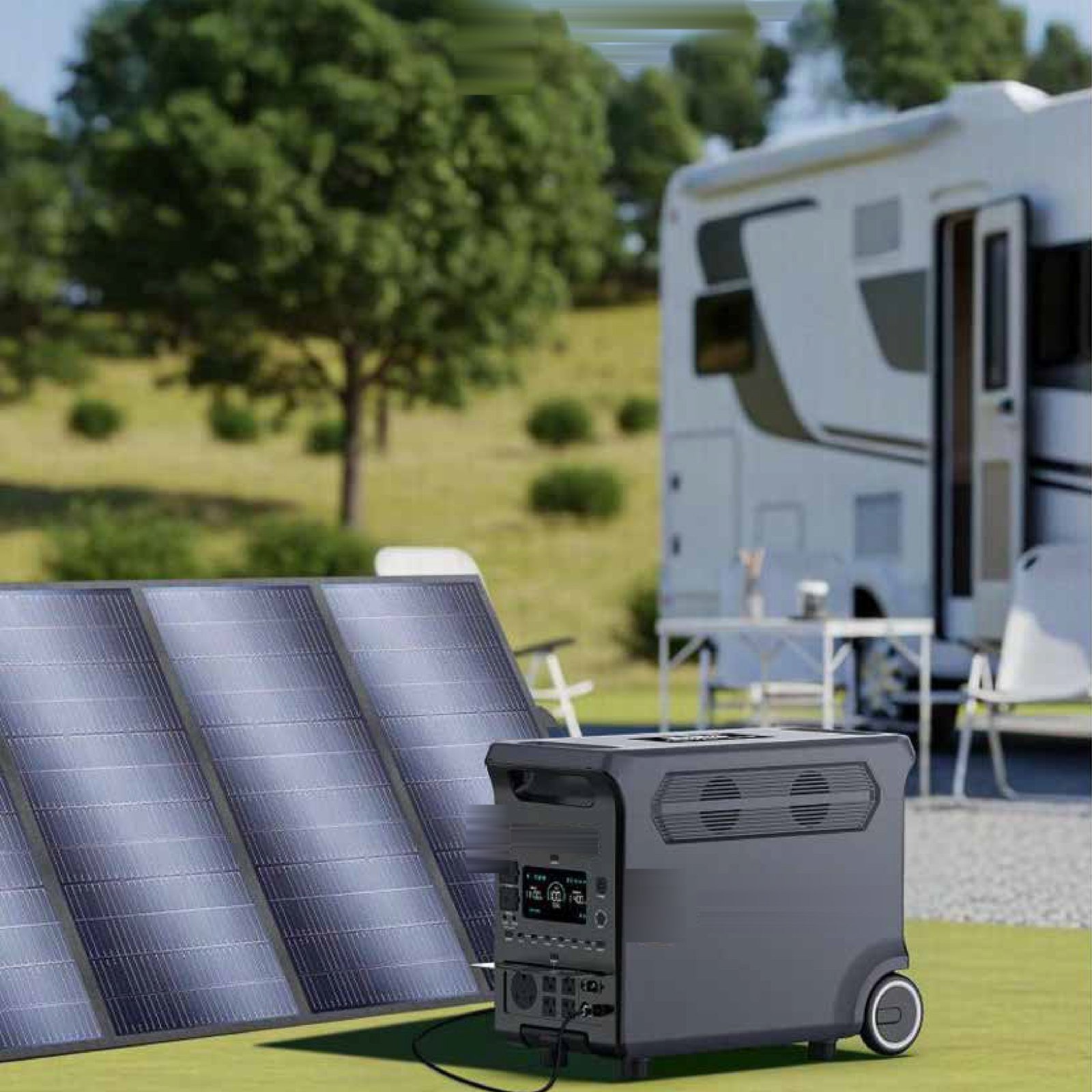
RV, camper van and overland brands end up buying portable power stations for the same reason: the electrical system has outgrown the vehicle it was designed for, and the customers want a product they can carry out of the van. This guide is written for the brands on the other side of that purchase order — the ones buying at OEM, with their own name on the housing.
Why brands buy a station instead of building one
A vehicle-integrated battery system is a permanent installation. A portable power station is a product: it is stocked, it is retailed, it is returned under warranty as a unit, and it can be sold to customers who do not own a van yet. Building that as an in-house project means an enclosure mould, an inverter design, a BMS and a certification file — none of which is the brand’s core competence. Buying it as a configured platform is usually the faster route to a shippable SKU.
Start with runtime, not watt-hours
Watt-hours is a capacity figure. Customers buy runtime, and runtime is capacity divided by actual draw — with losses, and with the inverter’s own consumption counted. Two rules that keep a specification honest:
- Continuous rating is the useful number. Peak or surge ratings describe a fraction of a second. A 3600 W class station carrying a 2500 W load indefinitely is a different product from one rated 3600 W peak.
- Count the loads that run at the same time. A coffee machine and a fridge-freezer rarely share a circuit by accident, but they do share one in a campervan kitchen.
The capacity and AC output pairings we build, tier by tier, are set out in the model range section of the OEM specification page.
Charging: alternator, shore power and rooftop solar
On the road, charging is the constraint, not capacity. Three inputs matter:
- DC input from the vehicle — the station has to accept a vehicle-level DC charging input, and the cable and connector standard matter because your customers will not solder one.
- Shore power / mains — for campsite hook-ups and for pre-delivery charging of stock.
- Solar — an MPPT input stage lets the unit take a rooftop array or a folding panel through its solar input rather than an inefficient adapter. On our platform the solar input on the larger models reaches 2000 W, which is what makes “plug the panel in and leave it” realistic for a van roof.
If your customer base is European and travels south in winter, the solar input specification deserves more of your attention than the capacity. The charging section of the platform page lists the supported input parameters.
The 12 V and DC outputs that fit a vehicle ecosystem
An RV buyer is replacing or supplementing a 12 V system, so the DC side has to look familiar. Ask for a port set that includes a 12 V car socket, a DC5521 output, and an XT60 or XT90 charging input alongside the USB-C PD and USB-A ports. The mix is one of the cheapest specifications to change at the sampling stage and one of the most annoying for a customer to discover later.
Weight, mounting and noise
Three practical figures that belong on your specification sheet:
- Weight. A station that suits a van installation and a station a customer carries to a pitch are different weight classes. Our range runs from a 3 kg hand-carry unit to a 42 kg wheeled platform, and the gap is deliberate.
- Mounting. If the unit is going to live in a locker while the van is moving, the enclosure retention and the accessory set become part of the specification, not an afterthought.
- Noise. Fan behaviour under load is a customer complaint waiting to happen in a small sleeping space. Sub-40 dB operation on the smaller tiers is achievable and worth stating on your own packaging.
A UPS function changes what the product is
On our larger models the inverter switches from mains to battery in under 20 ms on loads below 2500 W. That single figure moves a portable station from an outdoor accessory into a standby-power product: it will carry a router, a point-of-sale terminal, a laptop or a piece of instrumentation through a mains drop without the load noticing. For a van, that means the unit can also serve the vehicle’s working equipment — and for your retail positioning it is a claim worth printing. The standby power section documents the conditions.
Certification for the markets you sell into
Vehicle brands often sell across several markets from one warehouse. Grid voltage and plug standard change by country, and so does the certification file. European Union, UK, Australia, Japan and North America each expect a different combination, and the configuration has to match the destination rather than being adapted later.
What to send us to get a quotation
- The application and the load profile — what the customer actually runs, and for how long.
- Capacity and AC output tier you are targeting.
- The DC port set you need, and the charging inputs.
- Destination markets, so the AC configuration and certification are quoted correctly.
- Your branding assets, packaging requirement and language versions.
- Annual volume, and whether the first order is a mixed container.
Where the station sits alongside a fixed battery bank, our RV and camper lithium battery range covers the installed side and the portable power stations cover the carry-out side; a combined specification is normally the better answer for a van build.
Frequently asked questions
Can a portable power station run a camper van fridge?
Yes, subject to runtime. A compressor fridge draws continuously at a modest load, so the deciding figure is capacity divided by sustained draw, not the peak rating on the label. Size for the overnight period you want to cover.
How much solar input do I need on a van roof?
Match the array to the station’s solar input limit rather than to the roof area. The larger models on our platform accept up to 2000 W, which is more than most van roofs carry — the array, not the station, is usually the constraint.
Does the station charge from the vehicle alternator?
It can, through a DC charging input, provided the cable and connector standard match what the station accepts. Confirm the input specification with us as part of the configuration, since this is one of the most common sources of field complaints.
Is a portable power station a replacement for a van’s installed battery system?
For light loads, often yes. For a compressor fridge plus an inverter charger plus a permanent installation, the fixed system usually remains the right answer, with a portable station as the carry-out unit alongside it.
What weight should I specify for a camper van product?
Set a ceiling from how the customer will move it. Hand-carry tiers in the 11-22 kg range suit one-person handling; anything above that should be wheeled and treated as a semi-fixed installation in your marketing.
Can you put our branding on the housing and packaging?
Yes, including logo placement, product name, model numbering, retail carton, manual and language versions. That is the normal configuration in an OEM order.

Leave A Comment