
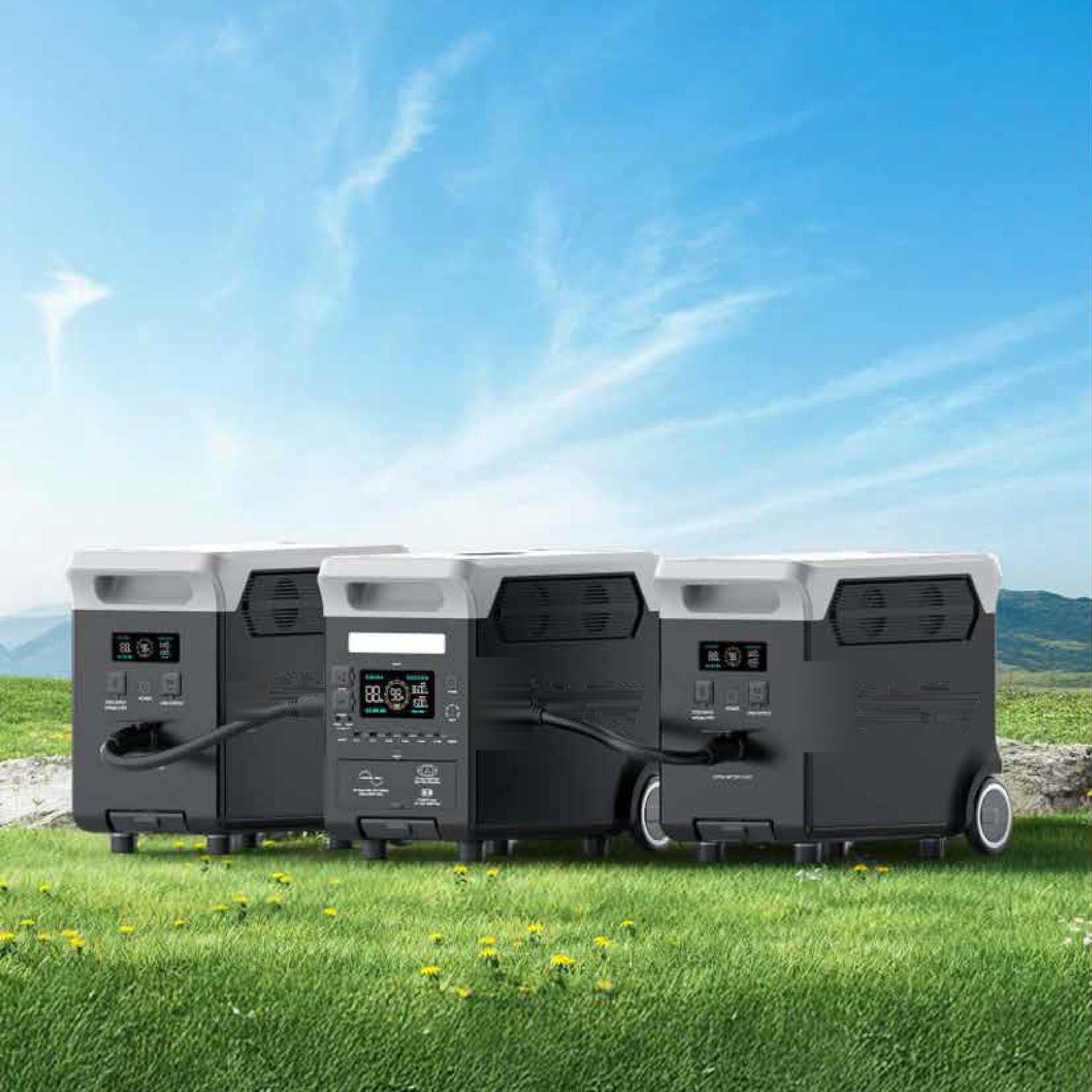
Sourcing a portable power station is not the same exercise as sourcing a battery or an inverter. You are buying a system in which the cell, the battery management system, the inverter, the enclosure and the firmware all have to agree with each other — and where a change in any one of them shows up in the certification file. This guide is written for importers, distributors and brand owners buying at wholesale, and it sets out how the platform is actually structured, what you can change, and what you should ask before money moves.
Who this guide is for
It assumes you are not buying one unit for personal use. It assumes you are building a line: a private-label range for a retail chain, a house brand for an outdoor or electrical distributor, or a specification that has to sit inside someone else’s product family. If that is the case, your questions are about repeatability, documentation and landed cost — not about which unit has the nicest display.
What OEM and ODM actually mean in this category
In portable power stations, the two words are used loosely. A useful split:
- OEM — an existing platform, with your branding, packaging and market configuration. Fastest route, lowest tooling cost.
- ODM — the platform is adapted for you: housing, port set, firmware behaviour, output configuration, or a combination.
- Full custom — a new enclosure or a new electrical architecture built around your specification. This is a tooling project, and it is priced and scheduled like one.
Our published portable power station OEM and ODM manufacturing scope sits in the first two brackets, and the page states plainly what we take on and what we need from you to quote.
The platform, top to bottom
Five layers decide everything downstream:
- Cell — chemistry and format. LiFePO4 prismatic cells behave differently from the NMC pouch cells used in most consumer units: lower energy density, longer cycle life, better thermal stability.
- Pack — series and parallel arrangement, busbars, sensing harness, mechanical retention.
- BMS — protection thresholds, cell balancing, temperature cut-offs, and what the unit is allowed to do at the edges.
- Inverter and charger — AC output topology, surge behaviour, transfer time, and the MPPT input stage.
- Enclosure, display and firmware — the parts your customer actually touches.
We manufacture the 3.2 V LiFePO4 cells that go inside, which means the cell supply, the pack assembly and the BMS configuration sit in one place rather than three. That matters when you need a spec change honoured across a repeat order.
The model ladder: what changes as capacity grows
Capacity tiers are not simply scaled-up versions of each other. Going from a hand-carry unit to a wheeled station changes the cell count, the thermal path, the inverter stage, the weight class and the shipping configuration. Treating a tier as “the same thing but bigger” is one of the most common mistakes in a first purchase order, which is why the published portable power station range is organised in tiers rather than as a single build.
The full ladder from a 288 Wh hand-carry unit to a 3840 Wh wheeled station with 3600 W AC output is documented, model by model, on the flagship specification page — including per-model weights and container loading figures.
What you can customise — and what you should not
Realistic customisation on an established platform:
- Branding — logo on the housing, product name, model numbering, silk-screen, nameplate.
- Housing — colour, finish, accessory set.
- Packaging — retail carton, inner packing, manual, quick-start card, language versions.
- AC configuration — 220-240 V / 50-60 Hz for EU, UK and AU markets; other voltages confirmed per project.
- Ports — the mix of USB-C PD, USB-A, 12 V car sockets, DC5521 and XT60 charging inputs.
- Firmware and app — app branding, charging-stage presets, display behaviour, protection thresholds.
- Compliance — the certification marks and test-report packages your market requires.
What you should not expect to change cheaply: the inverter topology, the enclosure mould, or the BMS protection logic below the thresholds required for safety certification. Those are the parts that carry the file.
Why two quotes for the same specification differ
When a quote is materially cheaper, the difference is usually in one of four places: the cell (grade, source, actual cycle life), the BMS (protection behaviour, balancing, sensor count), the inverter stage (continuous versus peak rating, surge behaviour) or the documentation (whether a test-report package is included or sold separately). Ask which one, in writing. A supplier who cannot answer has not costed your specification — they have costed a photograph of it.
MOQ, tooling, sample and lead time
Typical structure for a platform-based order:
- Sample — a branded evaluation unit, so your team can test against a real load profile rather than a datasheet.
- MOQ — quoted per model and configuration, because it is driven by the packaging run and the batch sizes the line is set up for.
- Tooling — only applies where a new mould is involved; logo and packaging changes generally do not require it.
- Mass production — scheduled backwards from your in-store or container date, not quoted as a fixed number of days.
We quote all four per project rather than publishing a single number, because a distributor filling a mixed container and a brand launching one hero SKU do not have the same economics.
The document pack that should come with your order
At minimum: UN38.3 test summary, MSDS, and the market-entry certification reports for the configuration you ordered. If you are selling into a retail channel in North America, that conversation usually extends to UL 2743 or UL 2056. For a longer treatment, see our notes on the compliance and documentation layer in the OEM programme section.
Eight questions to ask before you send a deposit
- Which cell is in it, and who makes it?
- What is the continuous AC rating, and what is the surge rating?
- What is the UPS transfer time, and at what load is it guaranteed?
- How many units fit in a 20 ft and a 40 ft container, at which weight?
- Which certification marks are held for my configuration, and can I see the reports?
- What is the MOQ for my packaging, and what changes it?
- What happens to the warranty when a unit arrives dead on arrival in my market?
- Who signs off a spec change mid-order, and how is it written down?
A factory answers these from its own line and documents. If yours needs to check with someone else each time, treat that as information.
Where to start
If you are evaluating the category, send us three things: your target market, your annual volume and whether you need an existing platform re-badged or an adapted specification. That is enough for a real quotation. The production and assembly overview shows how the pack line is organised, the quality management system documents how orders are inspected before they leave, and where the pack or BMS has to be specified from scratch the battery design and solution team handles that work.
Frequently asked questions
Do I need a tooling investment to sell my own portable power station brand?
Not for branding and packaging. A logo on the housing, your own model numbering, retail carton and manual are handled without a mould. Tooling only enters the conversation when you want a new enclosure or a new electrical architecture.
What is a normal MOQ for a branded portable power station order?
It is quoted per model and configuration, because it depends on the packaging run and the batch size the line is set up for. Mixed-model orders are normal for a first purchase.
Can the same platform be shipped to the EU and to the United States?
Not as the same build. Grid voltage, plug standard and the certification your importer or marketplace will ask for change by market, so the configuration is confirmed per project rather than assumed.
Is LiFePO4 the right chemistry for a portable station?
It costs you some energy density and buys cycle life and thermal stability. For units that will be cycled hard, stored in vehicles, or sold with a long warranty, that is usually the right trade.
How do I compare two suppliers quoting the same numbers?
Ask which cell, which BMS protection thresholds, the continuous versus peak inverter rating, and whether the test-report package is included. Those four answer most of the gap.
Can you supply under our brand only, without your own branding on the unit?
Yes. Re-badged units for another brand’s market are the normal case in this programme, and packaging, manual and nameplate follow your artwork.

Leave A Comment